Gutter materials
Steel Gutters in Boise, ID
Galvanized and galvalume steel for the homes where gutters take real abuse — sliding snow off metal roofs, falling cottonwood limbs, and constant ladder traffic.
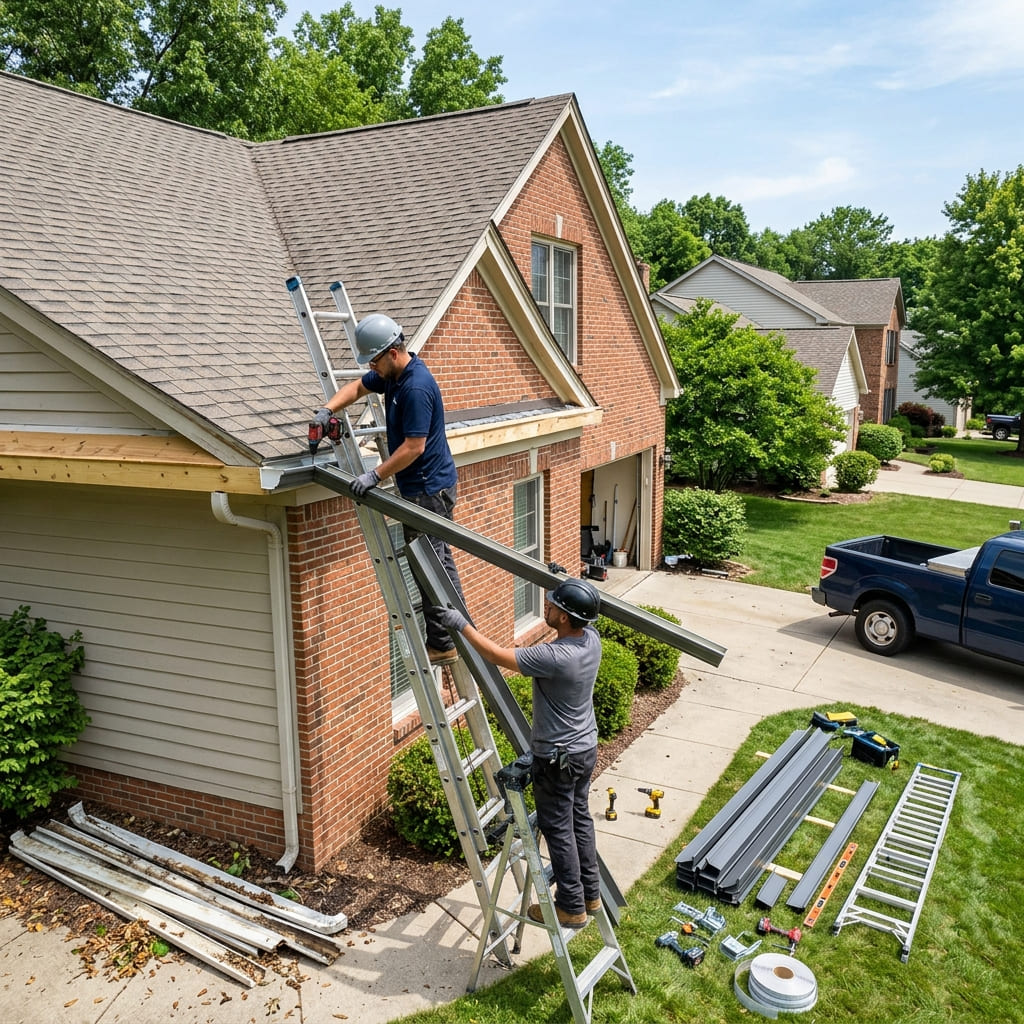
Steel gutters in Boise, ID install for $10 to $18 per linear foot and last 15 to 25 years in galvanized form. They cost roughly 20 to 30 percent more than seamless aluminum and they are noticeably stronger — which makes them the right answer for a specific set of Treasure Valley properties and the wrong answer for most of the rest.
The honest framing on steel is that it is a trade, not an upgrade. You gain stiffness and impact resistance. You give up permanent corrosion resistance and add weight to the fascia. If your gutters are not taking physical punishment, aluminum is the better material for this climate.
Galvanized vs galvalume steel
Galvanized and galvalume are both carbon steel protected by a metallic coating that corrodes preferentially so the steel underneath does not. The coating is the whole story.
| Galvanized | Galvalume | |
|---|---|---|
| Coating | Zinc | Aluminum-zinc alloy |
| Service life here | 15–25 years | Meaningfully longer |
| Standing water tolerance | Poor — this is where it fails first | Considerably better |
| Cost | $10–$16 per foot | $13–$18 per foot |
| Best use | Outbuildings, budget-driven steel jobs | Homes, snow country, anywhere ice sits in the trough |
For a Boise house, galvalume is generally worth the difference. Troughs here regularly hold meltwater and ice for weeks at a stretch in winter, and standing water against zinc coating is exactly the condition that starts rust in galvanized steel.
When steel is the right choice
Steel is the right choice in four specific Treasure Valley situations, all of which come down to impact or load rather than water volume.
- Metal roofs. When a metal roof warms enough to release its snowpack, several hundred pounds arrives in the gutter in about a second. Aluminum deforms; steel usually does not. Common on Eagle and foothills homes, and on shop buildings in Kuna and Middleton.
- Mature trees that drop deadwood. Cottonwood along the Boise River corridor and through Garden City sheds heavy limbs without warning. A falling branch dents aluminum and often just marks steel.
- Heavy snow load properties. Foothills elevations hold snow on the roof longer, and the accumulated ice-and-snow weight in the trough is real.
- Shops, barns, and equipment buildings. Where ladders, equipment, and traffic are constantly near the eave line, steel simply survives handling better.
What steel demands from the installation
Steel gutters put different requirements on the installation than aluminum does, and skipping them is why some steel systems fail early.
First, hanger spacing has to be tighter. Steel is heavier per foot, and the properties that justify steel usually involve snow load. Sixteen-inch spacing rather than the standard 24 is normal under metal roofing.
Second, the fascia has to be sound. The added weight is not enormous, but it is enough that marginal fascia which would hold aluminum will not hold steel through a winter. On older homes, fascia gets checked and repaired before steel goes up.
Third, cut edges need attention. Every cut through a galvanized panel exposes bare steel at the edge, and that is where rust starts. Ends, miters, and outlet punches should be treated rather than left raw.
Finally, avoid direct contact with copper. Copper and steel in contact with moisture set up galvanic corrosion that attacks the steel aggressively. Do not mix a copper downspout with a steel gutter, or use copper fasteners on a steel system.
Steel vs aluminum for a Boise home
| Steel | Aluminum | |
|---|---|---|
| Cost per foot | $10–$18 | $8–$16 |
| Service life | 15–25 years | 20–30 years |
| Corrodes? | Yes, once coating wears | No |
| Impact resistance | Excellent | Moderate |
| Load on fascia | Heavier | Light |
| Colors | Limited; often painted or mill finish | 25+ baked-on factory colors |
A middle path worth considering: heavier .032 gauge aluminum closes a good part of the strength gap without introducing rust risk. For homes that are borderline — some tree exposure, no metal roof — .032 aluminum is often the better value than stepping up to steel.
Maintaining steel gutters in Boise
Steel gutters need the same debris clearing as any other system, and one additional habit: watch for standing water. Because rust in steel starts where water sits, a run that has lost its pitch is a materially bigger problem in steel than in aluminum. Repitching a flat run is a routine repair and it directly extends the life of the system.
Once rust appears, understand what it means. A pinhole is not an isolated defect — it is the first place the coating failed, and more are following. Patching buys a season or two. At that point replacement planning is the honest conversation.
Straight answers
Steel gutter questions
How much do steel gutters cost in Boise?
Galvanized steel gutters install for $10 to $18 per linear foot in the Boise market, roughly 20 to 30 percent above seamless aluminum. Galvalume runs at the upper end of that range. On a 180-foot home that is about $1,800 to $3,240 for the gutter runs, before downspouts.
How long do galvanized steel gutters last in Idaho?
Galvanized steel lasts 15 to 25 years in the Treasure Valley. The zinc coating is what protects the steel, and once it wears through — at scratches, cut edges, and anywhere standing water sits — rust starts and spreads. Galvalume, an aluminum-zinc alloy coating, extends that meaningfully. Keeping the troughs clear so water does not stand is the single biggest factor in getting to the top of the range.
Is steel better than aluminum for gutters?
Steel is stronger; aluminum lasts longer without maintenance. Steel resists denting from ladders, hail, and falling limbs, and it handles the impact of snow sliding off a metal roof far better. But steel rusts eventually and aluminum never does, and steel is heavier on the fascia. For most Boise homes aluminum is the better default. Steel is the right answer for specific conditions rather than as a general upgrade.
When should I choose steel gutters?
Choose steel when the gutters take physical abuse. That means properties under mature cottonwood or pine that drop deadwood, homes with metal roofs where snow releases in sheets, foothills properties with heavy snow load, and outbuildings and shops where ladders and equipment are constantly around the eave line. In those situations steel's stiffness is worth accepting its finite corrosion life.
What is the difference between galvanized and galvalume?
Both are steel with a metallic coating that sacrifices itself to protect the base metal. Galvanized is coated with zinc. Galvalume is coated with an aluminum-zinc alloy, which resists general corrosion considerably better and holds up longer in standing water. Galvalume costs more and is the better choice in Boise, where troughs regularly hold ice and meltwater through winter.
Can steel gutters be seamless?
Yes. Steel coil can be roll-formed on site the same way aluminum is, producing continuous runs with joints only at corners and outlets. It is heavier to handle, so long runs take more crew and staging, and it costs more per foot. Some contractors only offer sectional steel, which reintroduces a joint every 10 feet — worth asking about specifically. See seamless gutters.
Get a steel gutter quote in Boise
We will tell you honestly whether your property actually needs steel, or whether heavier-gauge aluminum does the same job for less.